

Paul’s Perspective:
Most leadership teams don’t have an idea problem; they have a throughput and retrieval problem. When information lives in inboxes, Slack threads, and scattered docs, priorities drift and work gets re-decided multiple times.
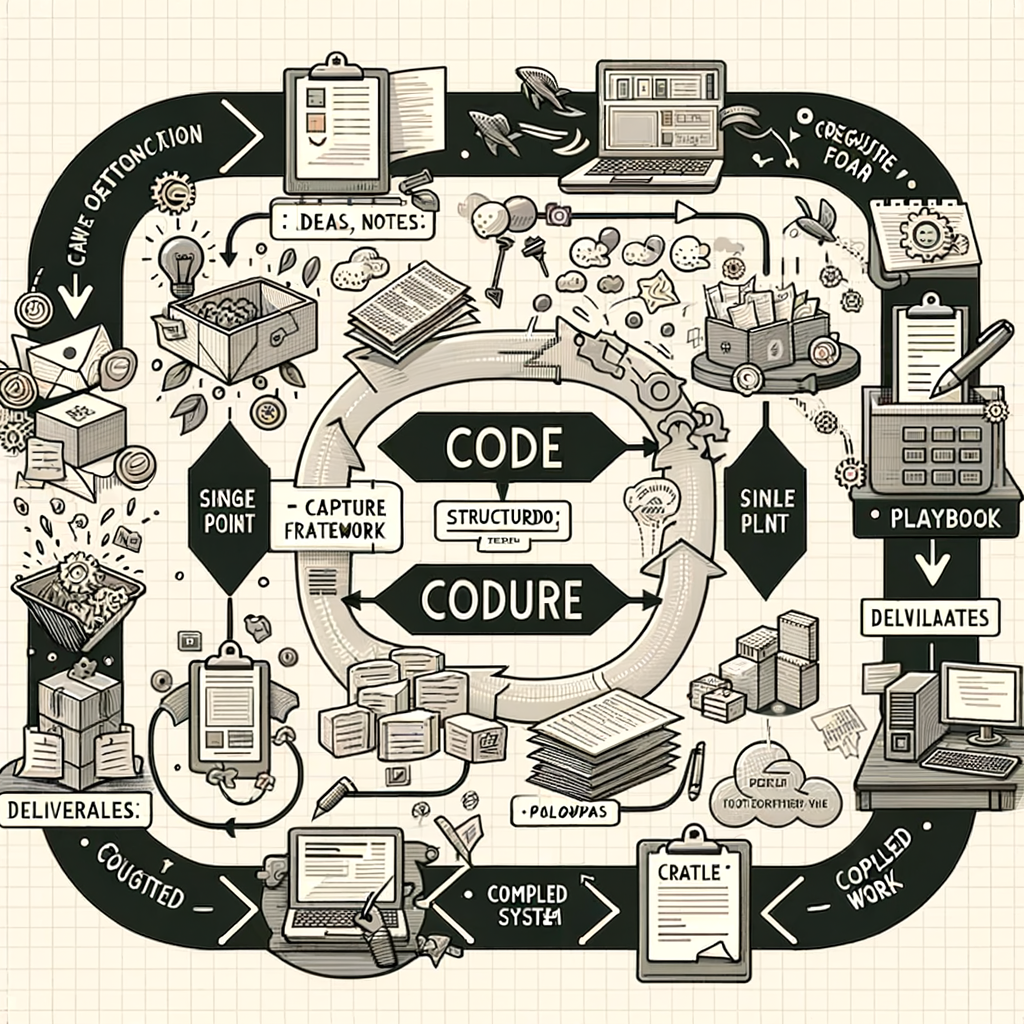
A lightweight framework like CODE forces a single flow from intake to output, which reduces context switching and makes “what matters now” visible. The tradeoff is discipline: you’re standardizing how people work, not just where they store files.
For executives, the payoff is speed and clarity—fewer stalled initiatives, less duplicated effort, and a clearer line from strategy to what actually ships.
Key Points in Article:
- Applies the CODE method to knowledge and work management: Capture inputs, Organize them into a system, Distill into reusable notes or decisions, and Express as shipped work.
- Separates “collecting” from “creating” so teams don’t confuse activity (saving links/notes) with output (decisions, deliverables, launches).
- Uses progressive summarization-style distillation to reduce noise over time and make key insights easier to retrieve when needed.
- Emphasizes building a repeatable pipeline from raw information to published artifacts (documents, proposals, playbooks, content, product changes).
Strategic Actions:
- Capture incoming ideas, notes, and requests in a single trusted place.
- Organize captured items into a simple structure your team can navigate consistently.
- Distill key information into concise, reusable summaries and decision-ready notes.
- Express distilled insights as concrete outputs (plans, playbooks, deliverables, shipped work).
- Review and refine the system regularly so retrieval gets faster over time.
Dive deeper > Full Story:
The Bottom Line:
- Unfocused execution turns good ideas into scattered projects that stall results.
- Standardize how you capture, prioritize, and ship work using one simple framework across your team.
Ready to Explore More?
If your team is drowning in notes, Slack threads, and half-finished initiatives, we can help you set up a practical capture-to-delivery workflow that fits how you operate. Reply if you want to compare what you’re doing today with a simpler, more repeatable system.