

Paul’s Perspective:
The practical question for leaders isn’t whether college has value in the abstract; it’s whether your business is paying an unnecessary “credential tax” in hiring and promotion. When degrees are used as a blunt filter, you risk excluding capable, diverse talent and inflating wages for the wrong reasons.
A skills-first approach forces sharper management: you must define what good looks like, measure it, and build repeatable ways to assess and develop it. That’s more work up front, but it creates a more resilient workforce strategy when labor markets tighten and roles evolve faster than curricula.
Key Points in Article:
- Degree requirements can shrink candidate pools and extend time-to-fill, especially in operational, sales, support, and technical roles where portfolios and work samples are available.
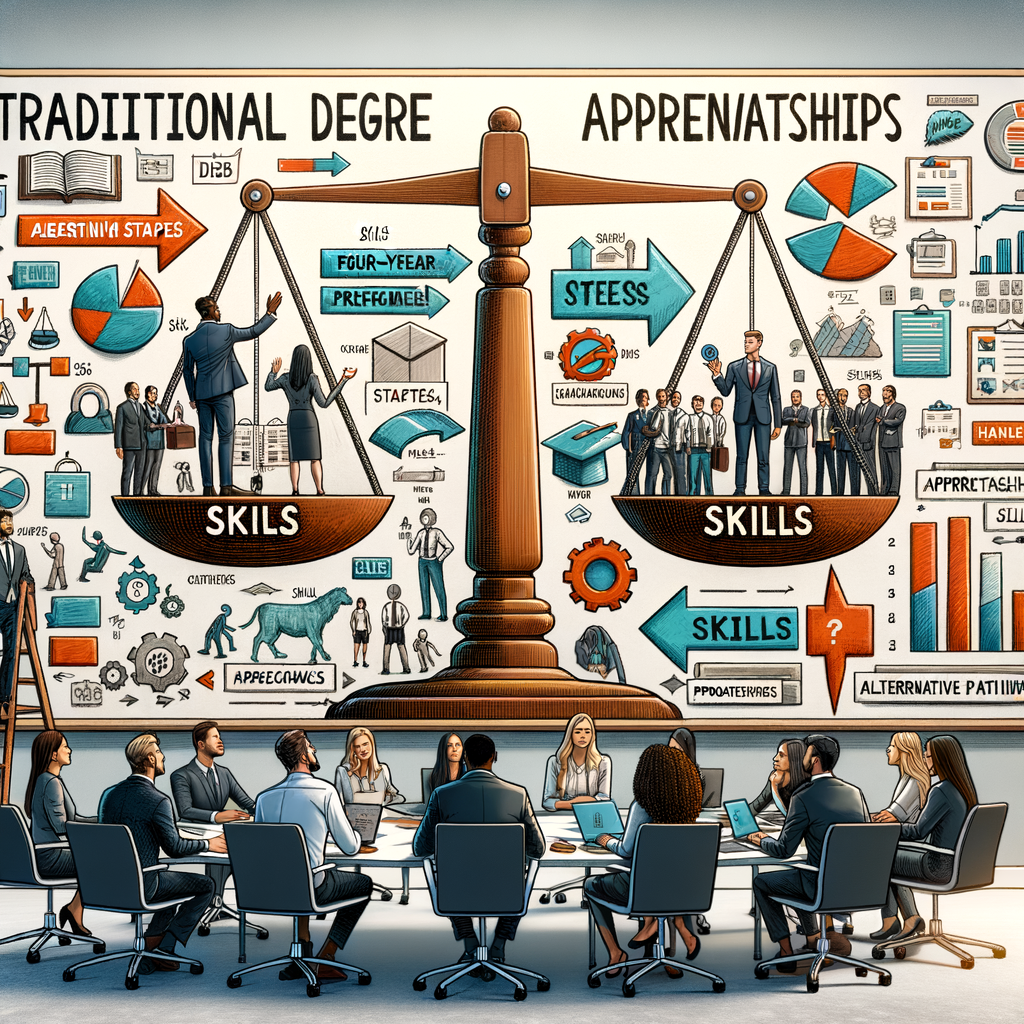
- “Skills signals” (work tests, certifications, apprenticeships, structured interviews, portfolios) can reduce bad hires versus relying on pedigree as a proxy.
- ROI differs materially by field; a uniform tuition-and-time investment doesn’t translate into uniform earnings outcomes across majors or institutions.
- Internal upskilling and clear competency ladders can replace external credentialing as the default path to advancement, improving retention and mobility.
Strategic Actions:
- Identify which roles truly require a four-year degree for safety, licensing, or specialized knowledge.
- Remove default degree screens where job performance can be validated through skills evidence.
- Define role competencies and performance outcomes in plain, measurable terms.
- Implement skills-based assessments (work samples, case tasks, simulations, structured interviews).
- Create alternative pathways (certifications, apprenticeships, internal training) tied to those competencies.
- Update promotion criteria to emphasize demonstrated capability and results over credentials.
- Track hiring quality, time-to-fill, retention, and performance to validate the new approach.
Dive deeper > Full Story:
The Bottom Line:
- More roles are shifting from degree screens to skills-based hiring as tuition costs rise and ROI varies widely by major and school.
- Audit your job requirements and career paths to prioritize demonstrable skills, targeted credentials, and measurable performance over blanket degree mandates.
Ready to Explore More?
If you want to move toward skills-based hiring without increasing hiring risk, we can help map role competencies, redesign job posts, and implement practical assessments. Reply if you’d like to pressure-test which degree requirements are truly necessary in your business.