
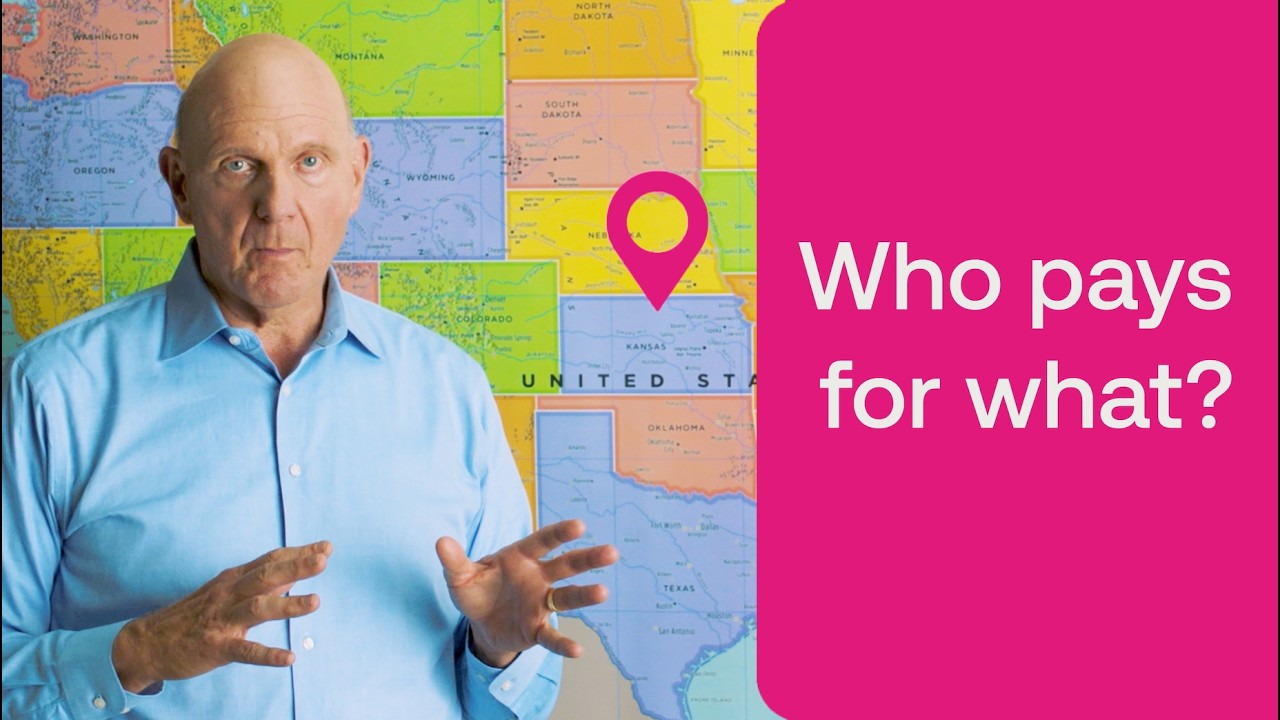

Paul’s Perspective:
For business leaders and executives, understanding where public services originate and how they’re funded can reveal opportunities to influence, partner, or benefit from local, state, and federal initiatives. This knowledge enables more informed strategic planning, helps anticipate regulatory or funding shifts, and supports smarter engagement with government stakeholders.
Key Points in Video:
- There are nearly 91,000 governmental units in the U.S., including federal, state, municipal, county, and specialized districts.
- Healthcare, education, transportation, and public safety are funded and managed through a mix of federal, state, and local revenues—each with distinct roles and contributions.
- Public education funding is split: K–12 relies heavily on local and state taxes while higher education leans more on state and tuition sources.
- Federal dollars often support safety net programs like Medicaid, but states and localities fund significant portions and administer programs.
Strategic Actions:
- Recognize the three key levels of government and their primary roles.
- Identify how major services such as healthcare, education, and transportation are funded and delivered.
- Understand the flow of federal funds to state and local governments, including matching requirements and shared management.
- Review the impact of recent legislation or court rulings on the distribution of government responsibility.
- Analyze the sources of government revenue (income, sales, and property taxes) and their use in providing services.
The Bottom Line:
- The video clarifies how different levels of government in the U.S. share responsibilities and funding for essential public services.
- Understanding these roles can help leaders make smarter decisions about taxes, benefits, and collaboration.
Dive deeper > Source Video:
Ready to Explore More?
We understand how public sector decisions can impact private business, and our team can help you navigate these complexities to optimize your strategy. Let’s work together to align your business goals with the realities of government funding and services.